
Parking Lot Lighting | Live Oak Electrical
Restore consistent exterior lighting in parking areas where outages, dim sections, flickering fixtures, or wiring problems affect visibility.
When Parking Lot Lighting Starts Going Uneven
Parking lot lighting problems usually start in sections. One fixture goes dark, another flickers, and soon the lot has uneven coverage with bright spots and dark areas.
We often see this when older fixtures, wiring, or pole connections have been exposed to heat, rain, humidity, and long nightly use.
If your parking lot lighting has dark areas or repeat outages, call 843-505-1167. We can check the fixtures, circuits, and power feeding the system.
Why Exterior Lighting Systems Wear Down Faster
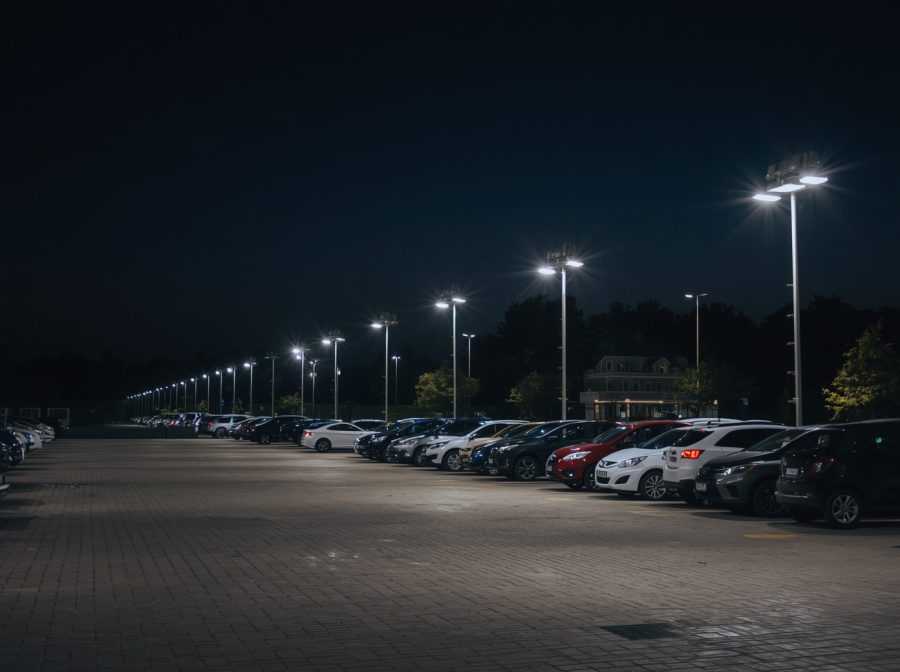
Parking lot lights work in harsher conditions than most indoor electrical systems. They are exposed to weather, temperature swings, moisture, insects, vibration, and long operating hours. That constant exposure slowly affects fixtures, wiring, connections, and controls.
In many lots, the first visible problem is a failed light, but the real wear may be happening at the connection points. Pole bases, junction boxes, conduit runs, and fixture housings can all collect moisture or develop corrosion over time. Once that happens, power delivery becomes less stable. A repair should account for those conditions. Replacing a lamp or fixture may restore light temporarily, but if the wiring or connection feeding it is weak, the failure can return.
ALL ELECTRICAL SERVICES OFFERED
Live Oak Electrical Services delivers expert solutions for all your home electrical needs. From lighting upgrades to smart home installations, our certified electricians provide safe, reliable, and efficient services. Trust us to keep your home powered and secure.
When Fixtures Flicker, Dim, or Cycle
A parking lot fixture that flickers or cycles on and off is usually showing early signs of failure. The issue may be inside the fixture, but it may also come from unstable voltage, a failing driver, loose wiring, or a poor connection. These symptoms are warnings before full outage.
We often see this when fixtures have been operating for years without inspection. The light may come on at dusk, shut off after heating up, then restart later. That pattern can make the problem seem random, but it usually means something is breaking down under operating conditions. What happens next is the fixture eventually stops working or affects nearby lighting on the same circuit. Catching the issue early can help prevent larger repairs and repeated service calls.
Why Power Distribution Matters Across the Lot
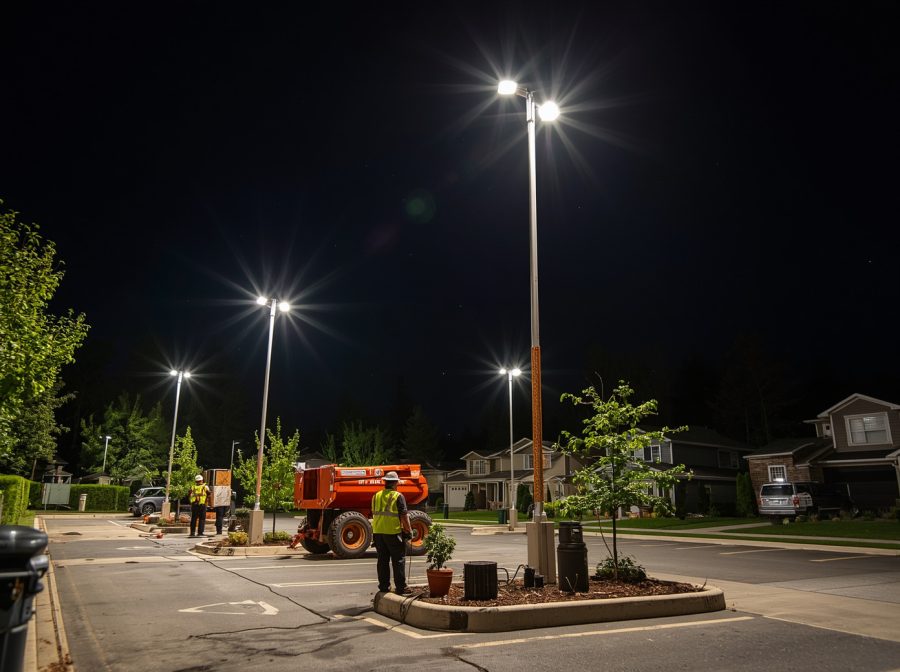
Parking lot lighting depends on more than individual fixtures. Power has to be distributed across poles, circuits, controls, and connection points so the whole area stays consistently illuminated. If one part of that path is weak, the lighting pattern becomes uneven.
In many properties, the next failure point is not the fixture itself but the feed that supplies it. A voltage drop, damaged conductor, loose splice, or corroded connection can affect one pole or a full section of the lot. That is why multiple fixtures may fail close together.
A good repair follows the electrical path instead of treating each dark fixture as a separate problem. That helps restore the system as a whole rather than patching one light at a time.
How Pole Bases and Junction Points Create Problems
The base of a light pole is one of the most important parts of the system. It is where wiring often enters, connections are made, and moisture can collect. If the base is damaged, corroded, or poorly sealed, both the electrical and physical condition of the pole can be affected.
We usually see problems at pole bases after years of weather exposure, landscaping activity, vehicle impact, or water intrusion. A light may fail at the top of the pole, but the issue may be starting near the ground. That makes inspection at the base just as important as checking the fixture. This is one of those areas where the visible symptom can be misleading. A new fixture will not solve a problem caused by damaged wiring or poor connections at the base.
Live Oak Electrical Services Beaufort County and Beyond
When Controls or Timers Cause Lighting Issues
Parking lot lighting often depends on timers, photocells, contactors, or control systems that turn lights on and off automatically. If those controls fail, the fixtures may not follow the right schedule, may stay on during the day, or may not turn on at night. That can make the system appear more broken than it is.
In many cases, the lights themselves are not the first failure point. The control side may be sending inconsistent signals or failing to energize the circuit properly. This can affect the entire lot or certain sections depending on how the system is wired. If the lights are not turning on at the right time, call 843-505-1167. We can check the control equipment along with the fixtures and wiring so the repair addresses the actual source of the issue.
When Upgrades Make More Sense Than Repeated Repairs
Repeated lighting repairs can become a sign that the system is aging beyond simple fixes. If fixtures are failing often, wiring is deteriorating, or the lot has uneven coverage, upgrading parts of the system may be more practical than continuing to patch it. The right answer depends on the condition of the existing equipment.
We often see older parking lot lighting systems where one fixture repair leads to another service call a few months later. That usually means the system is wearing down in multiple places. At that point, improving the fixtures, controls, or wiring layout can reduce ongoing problems. An upgrade can also improve visibility and reduce maintenance. The goal is not just brighter light, but more consistent coverage and fewer weak points across the property.
Stronger Parking Lot Lighting Without Repeat Outages
Parking lot lighting should provide dependable coverage without constant outages or uneven sections. The repair should look at why the system is failing, where power is being lost, and whether the fixtures and controls are still suited for the property. That is what makes the work more than a quick light replacement.
Our team checks fixture condition, wiring, pole bases, controls, circuit behavior, and connection quality. We look for the points where outdoor exposure and electrical demand are starting to break the system down. That helps prevent the same sections from going dark again after the first repair. The result is a lighting system that feels more consistent and easier to maintain. Instead of chasing one dark fixture after another, the property gets a stronger setup built around stable power, better visibility, and long-term use.